
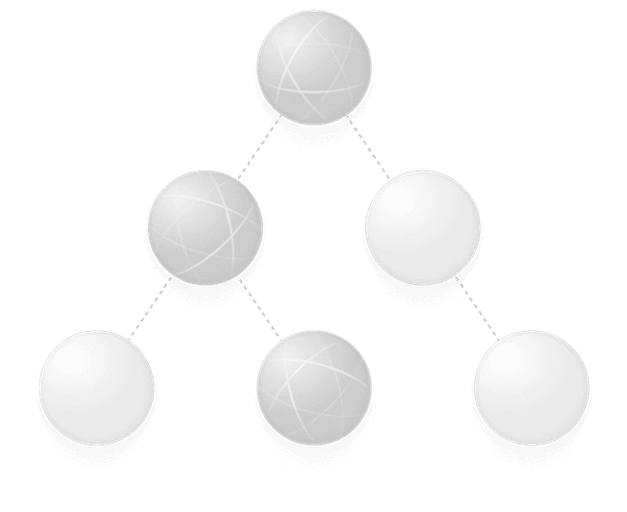
KaroCar Platform uses Turborepo’s incremental build system to orchestrate compilation across all six Next.js apps and their shared packages. Rather than rebuilding the entire monorepo on every change, Turborepo tracks task inputs and outputs, skipping work that hasn’t changed since the last successful run. This means that after the first full build, subsequent builds complete in a fraction of the time.Documentation Index
Fetch the complete documentation index at: https://mintlify.com/Codefied-CodePix/KaroCar-platform/llms.txt
Use this file to discover all available pages before exploring further.
Build Task Graph
Thebuild task in turbo.json declares "dependsOn": ["^build"]. The caret (^) prefix means “build all upstream workspace dependencies first”. In practice this enforces the following order:
- Shared packages (
packages/ui,packages/eslint-config,packages/typescript-config) build first. - Apps (
apps/web,apps/admin,apps/auth, etc.) build only after every package they depend on has finished.
Running a Full Build
Choose whichever invocation matches your setup:turbo run build and execute the same pipeline. The pnpm script is defined in the root package.json:
Building a Specific App or Package
Use Turborepo’s--filter flag to scope the build to a single workspace. Turbo still respects the task graph, so any packages the target depends on are built first automatically.
Build Outputs
For Next.js apps, Turborepo is configured to cache the.next/ directory. This is declared in turbo.json under the outputs field of the build task:
.next/** glob tells Turborepo to save and restore the entire Next.js build output as part of its cache. When the same code is built again — by you, a colleague, or a CI runner — Turbo restores .next/ from cache instead of rerunning next build.
The
dev task sets "cache": false because hot-reload servers are
long-running processes whose output cannot meaningfully be cached. The
lint and test tasks use Turborepo’s default caching based on source file
fingerprints.Local Build Cache
Turborepo stores build artifacts in.turbo/ at the repository root. The first time you build, every task runs and its output is hashed and stored. On subsequent runs:
- If nothing has changed in a workspace, Turbo replays the cached output instantly and marks the task as
cache hit. - If any input file has changed, only the affected workspace (and any dependents) is rebuilt.
| Status | Meaning |
|---|---|
cache hit, replaying logs | Inputs unchanged — output restored from cache |
cache miss, executing | Inputs changed — task runs and result is cached |
Type Checking
Type checking is a separate step that runs via the rootcheck-types script, parallelised across all workspaces independently of the build:
turbo run check-types, which runs tsc --noEmit in each workspace that defines a check-types script. Note that check-types is not declared in turbo.json’s tasks section — it is a root-level script that delegates to Turbo. Because type checking is a read-only analysis step, its results are cached by Turborepo — unchanged packages won’t re-run tsc.