

Documentation Index
Fetch the complete documentation index at: https://mintlify.com/estebanrfp/gdb/llms.txt
Use this file to discover all available pages before exploring further.
Technical Summary: GenosDB and Distributed Trust Model
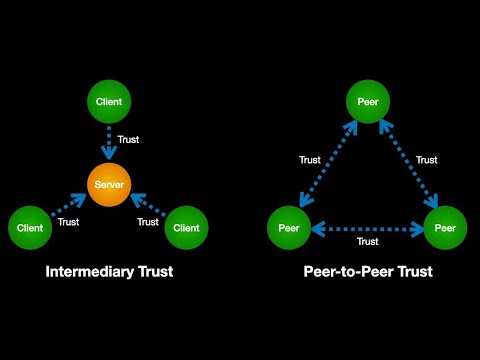
Central Challenge: Distributed Trust Without a Central Server
In peer-to-peer (P2P) networks, how can peers trust each other when there’s no central authority? GenosDB addresses this with a layered architecture based on three core principles:- Cryptographic Identity: Each user is identified by their Ethereum address, secured by a private key (protected via WebAuthn or mnemonic phrases).
- Verifiable Actions: Every operation is digitally signed, ensuring authenticity and integrity.
- Shared Constitution: Rules (such as roles and permissions) are embedded in the software and are consistent across all nodes.
The Security Manager (SM): Local Enforcer of Trust
Each node runs a Security Manager (SM) that inspects all incoming operations, verifying them against its internal rulebook. The SM does not trust any peer by default; it requires cryptographic proof and checks permissions based on its constitution.Defense Against Manipulation: The Case of Eve
- Scenario A: Eve, a guest, attempts to promote herself to a manager. Alice’s node:
- Verifies Eve’s signature.
- Confirms her role as guest.
- Rejects the operation, since only superadmins can assign roles.
- Scenario B: Eve alters her local client to bypass restrictions. Honest nodes, unaffected by her local changes, still reject the operation.
Incorporating Superadmins: Resolving the Trust Paradox
- Superadmins are statically defined in the initial configuration (
sm: { superAdmins: [...] }). - The SM first checks the static superadmin list before consulting the distributed database.
- This ensures a secure and verifiable chain of trust.
Eventual Consistency and Security Prioritization
- If a superadmin promotes Bob and he acts immediately, a lagging node might reject Bob’s action initially.
- Once the promotion is received, the action is accepted.
- Security is prioritized over immediate availability, ensuring actions are only accepted with verifiable proof.
Conclusion: Emergent Security Without Centralization
GenosDB achieves trust through distributed verification: rules reside in code, actions are validated by signatures, and each peer enforces rules independently. No central server is needed—only proofs, a shared constitution, and cryptographic consensus.Overview in 3 Steps
| Step | Key Component | Primary Function |
|---|---|---|
| 1 | Identity + Signature | Ethereum Address + Private Key: ensures authenticity and integrity |
| 2 | Shared Constitution | Embedded RBAC in SM: defines uniform permissions and authority |
| 3 | Distributed Security | Local SM without default trust: verifies each operation against its own rules |